

Approvals are not keys in hand.

A housing announcement matters when someone can actually move in. A neighbourhood economy matters when the shop on the corner can stay open. Toronto's public counts tell part of each story. Here is what to look for next.

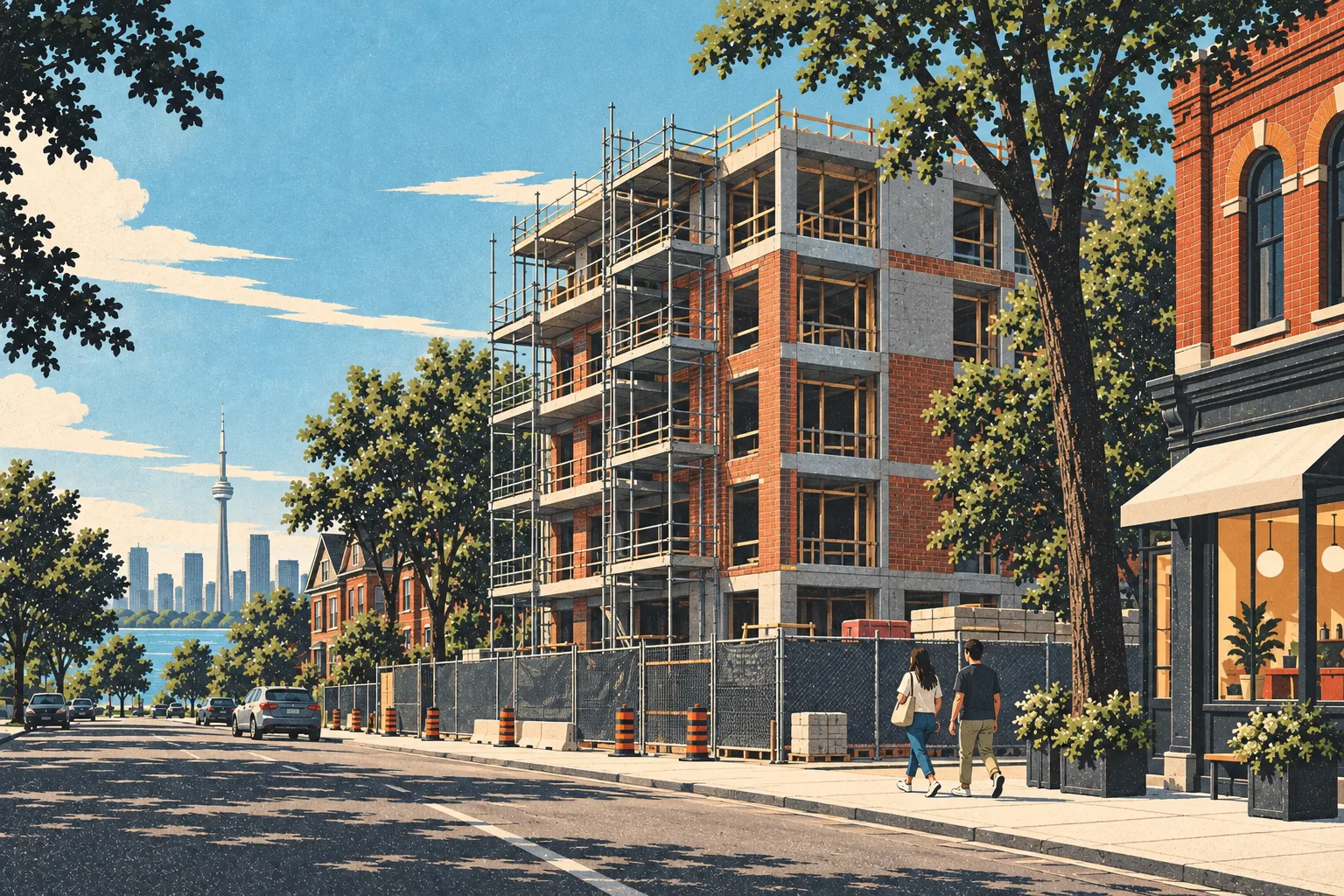
Print-style scene of a fenced, unfinished apartment building on a Toronto neighbourhood street
Homes still in progress.
Print-style scene inside a Toronto home as two residents enter with keys, moving boxes and a plant
Keys in hand.

From plan to front door

Where are the homes people can move into?

Toronto's HousingTO dashboard reports 33,198 approved homes in specified categories through December 31, 2025, toward its 65,000-home 2030 target. That tracks homes in the pipeline. It doesn't tell us how many are built or ready for someone to move in.

The measure covers approved rent-controlled, affordable, rent-geared-to-income and supportive homes. It doesn't cover every new home in Toronto.

Explore the City HousingTO dashboard ↗
HousingTO target / 2030 65,000 Reported approvals / Dec. 2025 33,198

About half of the target has been approved. The dashboard doesn't say how many homes are ready to live in.

Follow each home to the finish line.

These are different milestones. Reporting one as though it were the next can make the housing picture sound further along than it is.

  1. Reported here

    Approved

    A proposal has cleared an approval stage. The HousingTO figure on this page counts eligible approved homes.

  2. Ask for the count

    Started

    Construction has begun. An approved home may still be years away from this point.

  3. Ask for the count

    Completed

    Construction is finished. Completion is a separate result from permission to build.

  4. Ask for the count

    Occupied

    A household has a place to live. This is the outcome residents experience.

The later milestones are questions for the same HousingTO cohort, not zeroes. They need their own dates, definitions and sources before they can be compared with approvals.

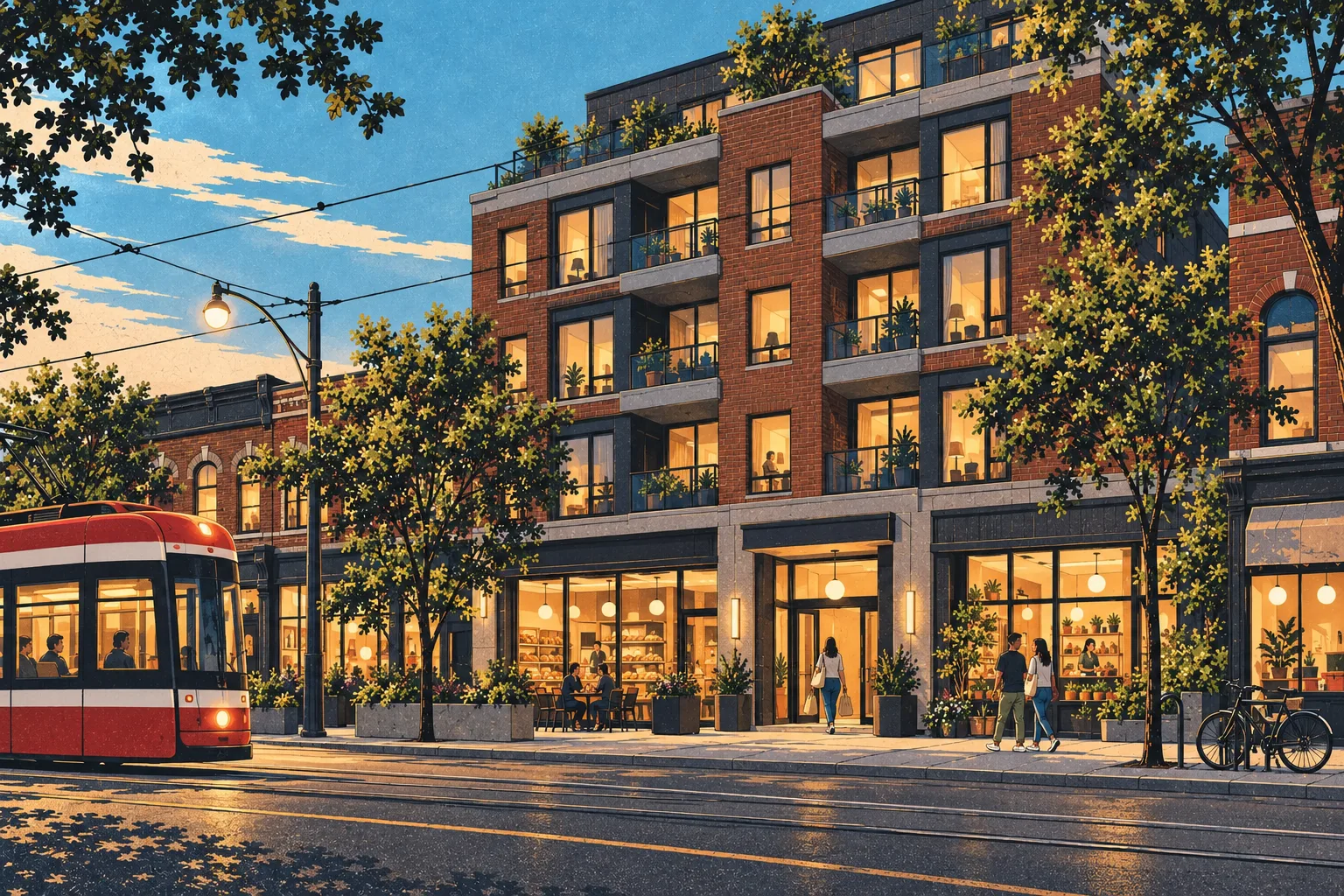
Illustrated occupied mid-rise on a Toronto avenue, with lit apartments and neighbourhood shops below

At street level

A business count won't tell you how your block is doing.

A bakery on Bloor, a restaurant on Queen, and a service shop in Scarborough each depend on people being able to reach them and wanting to return. The citywide count is worth watching. It won't tell you whether the bakery on Bloor can pay its bills.

Toronto / May 2026 187,402 active businesses
1,885 fewer

than in May 2025, according to the City's Economic Dashboard. That's 1,885 fewer active businesses in the count. It doesn't mean 1,885 storefronts closed.

Explore the City Economic Dashboard ↗

What would explain the change?

Openings and closures. How many firms started, closed, moved, or changed their registration? A net total hides the movement behind it.

Jobs and customers. Are local operators hiring, and are commercial streets drawing enough foot traffic to sustain them?

The conditions outside. Can staff and customers reach the door, use nearby transit, and count on clean, maintained public space?

Why did the count fall? The dashboard doesn't say. For resident accounts of storefront and public-space conditions, see Jobs on Toronto's main streets; those accounts describe experiences, not how common they are citywide.

Four conversations about one main street

What does it take to keep a door open?

A citywide count won't tell you what it costs to keep a shop open on your block. These conversations show what people are dealing with; they don't tell us how often it happens across Toronto.

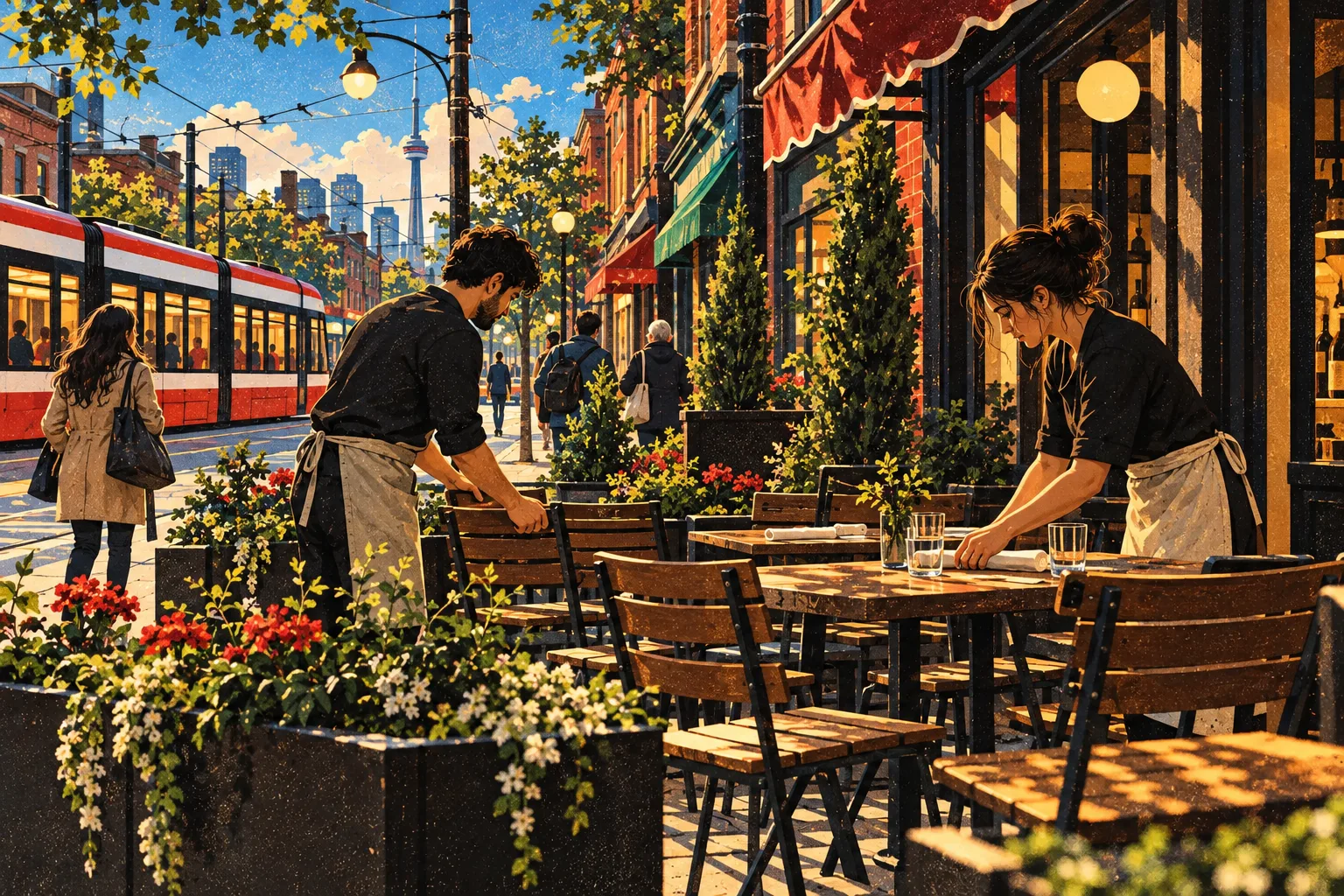
Illustration of two Toronto restaurant workers setting up a street patio before lunch
The bill

What does a patio cost a restaurant?

A Little Italy restaurant owner said his CaféTO patio fee rose by $1,000 after the annual permit fee doubled. The thread also debates whether the extra outdoor seating offsets that cost. For that owner, the question is whether the extra tables bring in enough business to cover the fee.

The trip

How do customers reach Chinatown?

Businesses raised concerns about the loss of Dundas Street parking. Commenters pointed to nearby garages and argued for better transit access. The useful question is how customers actually arrive, and whether changes make the street easier to visit.

The weekday

Who is downtown on a Tuesday?

A discussion about downtown office attendance connects fewer workers in the core with pressure on local shops. Other commenters defend flexible work and question whether a return-to-office push is the right fix. Foot traffic deserves a measure of its own.

The public record to build

Show the result, then show the route there.

For homes: publish approvals, starts, completions and occupancy for comparable groups of homes, with dates and clear definitions.

For main streets: pair the active-business total with openings, closures, employment and local commercial conditions.

For residents: make the measures easy to revisit, so a progress update can be checked against the last one.

How to read the numbers ↗